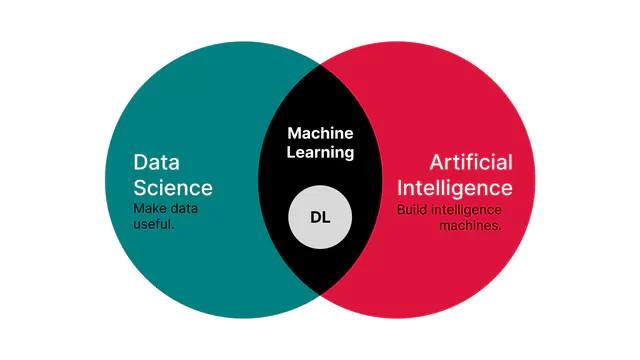
Machine Learning
The foundations of Machine Learning and Deep Learning
A practical guide to ML and DL foundations, regularization, hyperparameter tuning, CNNs, RNNs, Transformers, evaluation, and the model lifecycle.
I ship the ML that answers those questions — and I write my way up the theory of deciding, from statistics to reinforcement learning.
I build ML systems that make decisions: a recommendation and sentiment service that served live predictions inside a campus events app, a RAG chatbot that handles client intake and common legal questions for a law firm, and the Python backends behind Ertaqy’s AI features in production today. Different products, same shape: a model, a Python backend, and a decision someone actually acts on. Here I write about how machines learn to decide, from statistics up to reinforcement learning.
m101yosef is a version numberRead the middle of the handle: 1.0.1 — not the launch, the
patch right after it. A 1.0.1 only exists because something
real shipped, something broke, and someone fixed it. It's the most
honest version number there is.
Ship. Notice what breaks. Fix it. Ship again. That loop is the whole brand — how I build, how I write. Nothing here is finished — just versioned.
A practical guide to ML and DL foundations, regularization, hyperparameter tuning, CNNs, RNNs, Transformers, evaluation, and the model lifecycle.
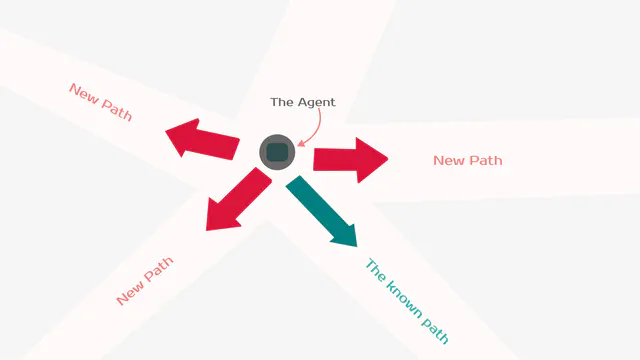
A practical walkthrough of value-based and policy-based reinforcement learning, MDPs, and the main algorithms for engineers getting started with RL.
A practical guide to ML and DL foundations, regularization, hyperparameter tuning, CNNs, RNNs, Transformers, evaluation, and the model lifecycle.
Machine Learning
A practical walkthrough of value-based and policy-based reinforcement learning, MDPs, and the main algorithms for engineers getting started with RL.
Reinforcement Learning

A RAG-powered legal intake and Q&A chatbot for an Egyptian law firm, answering common Egyptian law questions in Egyptian Arabic and handling first contact with prospective clients.
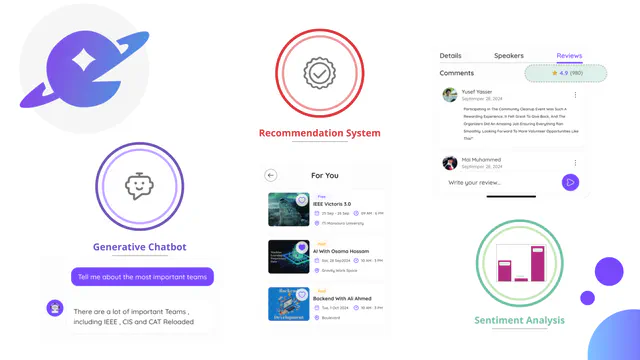
Centralized Mansoura University activity-booking concept informed by competitive research and a student survey, built with the IEEE Vectories team.
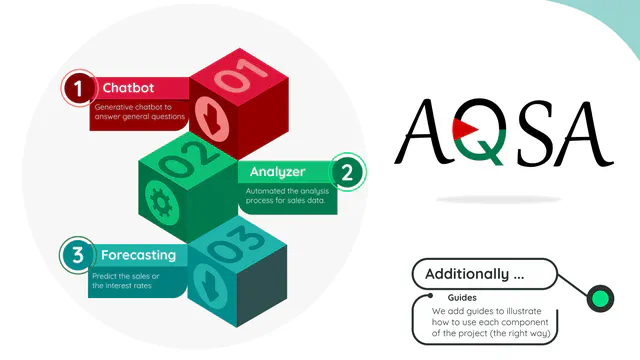
A research project on AI decision support for early-stage startups (a generative chatbot, an automated data analyser, and a forecasting module), designed and prototyped as a team, with a published report.